
Every service provider, say analysts, now needs to make a much larger investment, and therefore needs a much larger share of the market to be profitable.
Most of the changes have come about in the last four years and ITC is now reaping the dividends - standalone revenues from the non-cigarettes FMCG business have grown 40 per cent from FY17 to Rs 14,728.21 crore in FY21 and pre-tax profits 30 times to Rs 823.69 crore. The business accounted for 30.58 per cent of gross revenues and 4.85 per cent of pre-tax profits in FY21. "In the last four years, our margins in FMCG have gone up by 640 basis points (bps) and EBITDA margins have been moving up consistently. "We created levers that enabled a sustained growth trajectory," said ITC chairman and managing director Sanjiv Puri. Puri took charge as the chief executive officer in 2017; in 2018, he was redesignated managing director and effective May 2019, he became chairman.

New data show tax reform, better tracking needed

Fiscal consolidation is keenly awaited.

The fast-growing, high-margin branded spices business is turning out to be an interesting growth opportunity, which to an extent was reflected in the Sunrise-ITC deal, with multiple parties from PE to strategic players joining the fray.

Morgan Stanley writing down its investment in the e-commerce leader by 27 per cent does not augur well for the sector.
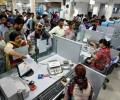
Share rises further to 73 per cent from 66 per cent last year; Some overseas i-banks seen scaling down operations

The top losers from the Sensex pack are ONGC, Coal India, Vedanta, Reliance Inds and L&T.

The RBI fell short of pumping Rs 150 billion into the economy at the beginning of 2018-2019.

Gold has held up better than many expected.

The company is unlikely to continue with the CEO-COO model

The poor and unbanked can take their rightful place as consumers of financial services only if the Modi government encourages different entities to advance the financial inclusion agenda, say Vikram Gandhi & Chandni Ohri.

While companies having fewer visa holders in the US seem to be less exposed to rising protectionism, most front-line IT stocks are trading at attractive levels and, to a large extent, factor in near-term headwinds.

Govt reconstitutes body, says will not interfere in senior PSB appointments

The 30-share Sensex ended up 165 points at 29,044 and the 50-share Nifty gained 54 points to close at 8,834.

Booked between 2007 and 2011, out of the total 32,700 residential units under various Jaypee Infratech (JIL) projects, at least 20,000 homes are yet to be delivered. Supreme Court documents show that, till last March, Jaypee had issued 7,997 offers of possession to homebuyers while executing only 6,530 sub-lease deeds. These deeds offer homebuyers possession rights but, unlike registration, does not guarantee absolute ownership.

So, what does 2016 have in store for the Indian markets? Will they be able to take a giant leap forward in the leap year, and what are the key risks?

Move could be aimed at integrating operations with Indian subsidiary.

'Tax cuts will have only marginal effects in the short run and significant positive effects in the medium term,' says Shankar Acharya, former chief economic adviser to the Government of India.

The event will be significant for the Congress and Trinamool Congress leaderships, cementing the proximity during the winter session of Parliament.

In prior elections, not only have opinion poll forecasts been very different from the results, the error margin has increased over time. One need only look at the charts that show the Sensex half a year before and after the results day for the last six elections. The markets did not change direction in any, says Neelkanth Mishra.
The rupee tumbled past 63.00 to the dollar, down about 2 per cent on the day and breaching the previous low of 62.03 hit on Friday despite a spate of measures in recent weeks by the central bank and government to defend it.

'Wasn't it the PM's duty to reach out to the daily wagers of whom he claims to have been a part?' asks Jyoti Punwani.

Given the concerns around trade wars that threaten to jeopardise global capital flows as well, attracting foreign capital needs to be a policy priority, says Neelkanth Mishra.
Markets recorded their biggest single-day fall since August 1 amid growth concerns in the euro zone.

IIP for November 2015 and CPI for December 2015 will be announced today.

'The current crisis is a result of a clash between a coercive attempt by the government to justify demonetisation and rising digital transactions against the market and the economy fighting the unexpected pressure from atop.'
From lack of big reforms to regressive tax policies, the Modi govt has surrendered its initial momentum, says Shishir Asthana.

The most preferred CoCo bonds are those through which banks raise their additional Tier-I capital.

Sensex closed over 118 points down on Thursday.

The Rs 2,000-crore Patanjali, looking to grow its turnover two-and-a-half times in FY16.

In the near term, the key driver will still be the government's fiscal spending.
A sluggish economy and stalled bureaucratic decision-making for the past two years thwarted capital investment and dented earnings, making it tough for the companies to raise funds.

Gaurav Deepak has raised funds for about 100 new-age entrepreneurs.

Double tax exemption on wages paid to women can encourage companies to hire, retain and compensate women better, argues Nitin Pai.

While lower gas output led to earnings cuts, price rises with regular ramp-ups in output will lead to earnings upgrades
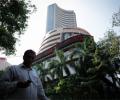
Jindal Steel and Power was the top loser down 10% followed by Hindalco, Tata Steel, Tata Power which ended down between 0.5-3% each.

Investment in market leaders with a safety-first approach could yield reasonable returns across sectors.

From Narendra Modi's victory in 2014 to the Nitish-Lalu triumph in 2015 and delivering Assam to the BJP in 2016, young and very professional strategists have startled politicians and the media.

In refusing to accept its failure, the government has sowed the seeds of further damage: by keeping India short of cash; reducing the headroom for responses to seasonal spikes in cash demand; and increasing the chances that groups will panic at temporary cash shortages, says Mihir Sharma.
